
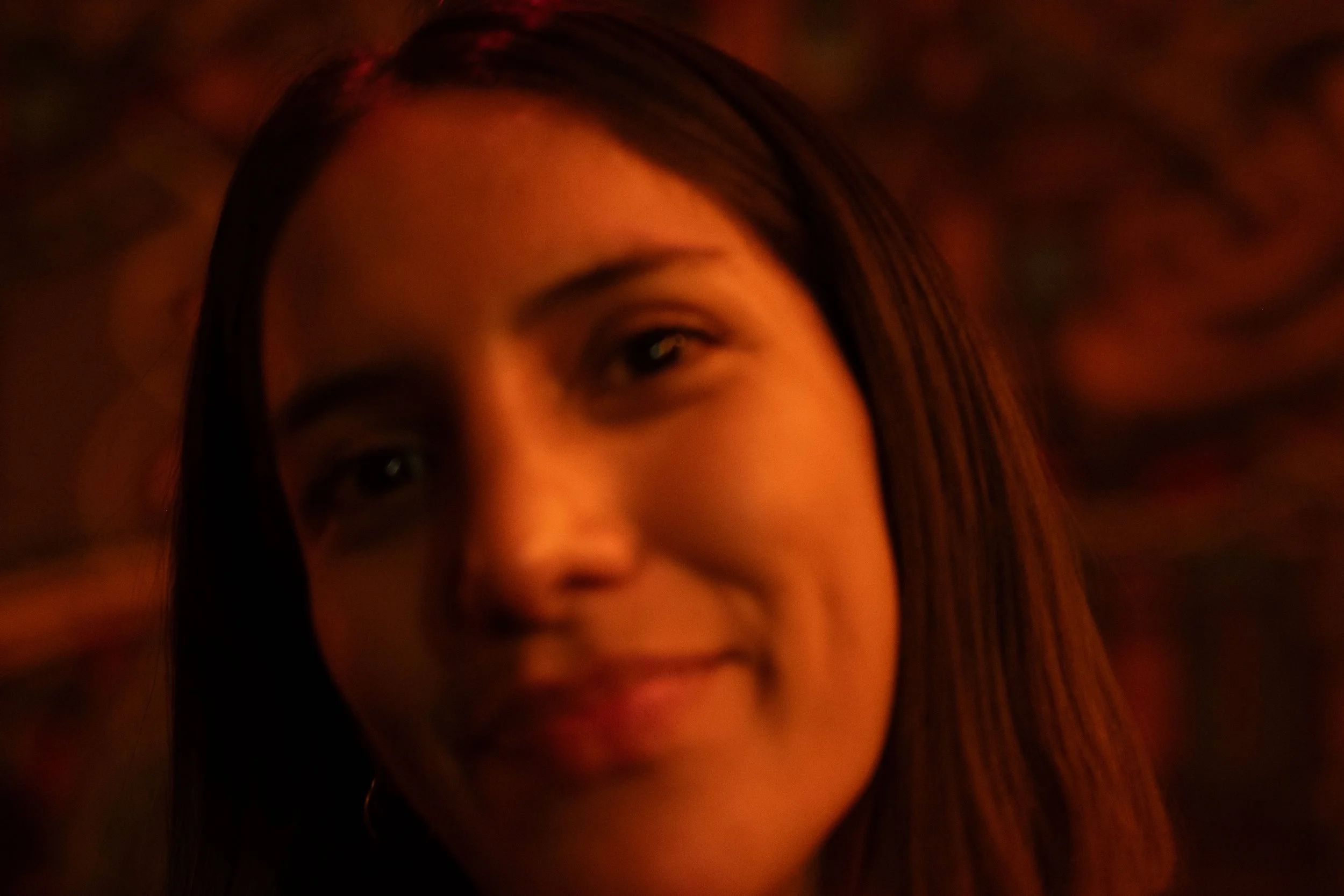
Carolina Herrera is a documentary photographer and filmmaker based in New York City whose work explores migration, identity, and belonging. Her practice centers on Latino families, with a particular focus on children and motherhood. Through an intimate and empathetic lens, Herrera weaves the personal with the political, illuminating overlooked narratives with care and depth.
Born in Buenos Aires to Peruvian parents, Herrera studied Graphic Design at the Faculty of Architecture, Design, and Urbanism (FADU) at the Universidad de Buenos Aires. She began her professional career as a graphic designer at Lanzallamas, a design agency, before gradually shifting her focus toward photography and visual storytelling.
In 2018, she became involved in volunteer work with several animal rescue NGOs in Argentina, including Pichichos Al Rescate, Soplo de Vida, and Zaguates. In these roles, she photographed animals ready for adoption and documented sterilization campaigns aimed at raising awareness in underserved neighborhoods of Buenos Aires. Alongside this work, Herrera served as a foster home for Pichichos Al Rescate, rescuing and caring for more than 60 animals over six years. She also contributed to the organization’s content team, creating materials for sponsors and developing social media strategies to advocate for animal welfare.
After volunteering at a rural school in Kimuka, Kenya, Herrera studied photojournalism at A.R.G.R.A. (Asociación de Reporteros Gráficos de la República Argentina). In 2021, she founded her own photography studio, Amico, specializing in animal photography. Her work includes interspecies family portraits, commercial projects for pet-oriented brands, and ongoing collaborations with animal welfare organizations. That same year, she began working with OhMyDog magazine, portraying the bond between local celebrities and their pets.
In March 2024, Herrera volunteered with the NGO Hijos de la Luz in Varanasi, India. In addition to supporting the organization’s daily efforts to provide food, clothing, and education to vulnerable children, she played a key role in creatively documenting their work. Through photography and storytelling, she helped strengthen the NGO’s visual identity and expand its reach and impact.
In May 2025, Herrera completed the One Year Documentary Practice and Visual Journalism program at the International Center of Photography under the Director’s Fellowship. There, she developed A Long Road Home, a visual and emotional journey following a Colombian family’s arrival in the United States in 2024 as they adapt to a new life in New York City. At the heart of the project is Joseth, the family’s 12-year-old son, offering a rare and intimate perspective on migration through a child’s eyes. The project was nominated by Angelika Hala for UNICEF’s Photo of the Year. Since then, Herrera has worked as a photographer on assignment for NPR, Reuters, and The New York Times.
In recognition of her work, Herrera received the Canon Award at the Eddie Adams Workshop in 2025 and was selected for the Bronx Documentary Center Film Fellowship (2025–2026). During the fellowship, she produced two short documentaries. Her first, El Nido, follows Mayra, a migrant asylum-seeking mother from Otavalo, Ecuador, who transforms her van into a refuge for her children while working along Junction Boulevard. El Nido was honored with an Award of Excellence from the Alexia Foundation this year. Her second, folllows Joseth, navigating his first year in New York after migration uprooted his life. As his family struggles to rebuild their lives, he tries to adapt to an unfamiliar city while searching for stability, belonging, and a place to finally call home.
In addition to her editorial work, Herrera has collaborated with The Stanley Greene Foundation and Our Time Projects on documentary storytelling initiatives. She continues developing intimate, character-driven projects exploring migration, displacement, and family. Deeply sensitive and quietly optimistic, Herrera embraces the human complexity behind every story, including her own.